- Philadelphia and Southeastern PA: Heatwaves, Severe Storms, Flash Floods, Flash Droughts, Extreme Winds, Microbursts, Tornadoes
- Barrier-Islands From the Jersey Shore to the Outer Banks
- The I-95 Corridor: Severe Storms, an Expanding “Tornado Alley,” Straight-Line Winds, and the Urban Heat Island
- Pennsylvania: When the Levee Breaks — Crying Won’t Help You, Praying Won’t Do You No Good
- Chester County, It’s Shocking: Lightning Strikes Are Surging
- Chester County: Rapid-Fire, Near-Continuous Cloud-to-Cloud Lightning
- West Chester, Pennsylvania: Urban Flooding — Unfortunately, Worms Can’t Swim
- West Chester, Pennsylvania: Hydroclimatic Whiplash and Flash Droughts — Unfortunately, Millipedes Can’t Swim
- The Backyard Experiments: Hydroclimatic Whiplash, Soil Degradation, Insect Decline, and Ecosystem Collapse
- Coatesville, PA: Hydroclimatic Whiplash — Dying of Thirst in a Flood
- Backyard Megapitfall Traps: A Changing Ecosystem for Frogs, Spiders, and Worms
- The Jersey Shore and Florida Coast: Sea Level Rise, Inverse Barometer Effect, Wind Stress, Flooding, Saltwater Intrusion
Category: Berks County
bookmark_borderCanadian Wildfire Smoke Returns: A Growing Summer Threat to Philadelphia’s Air Quality
by Daniel Brouse
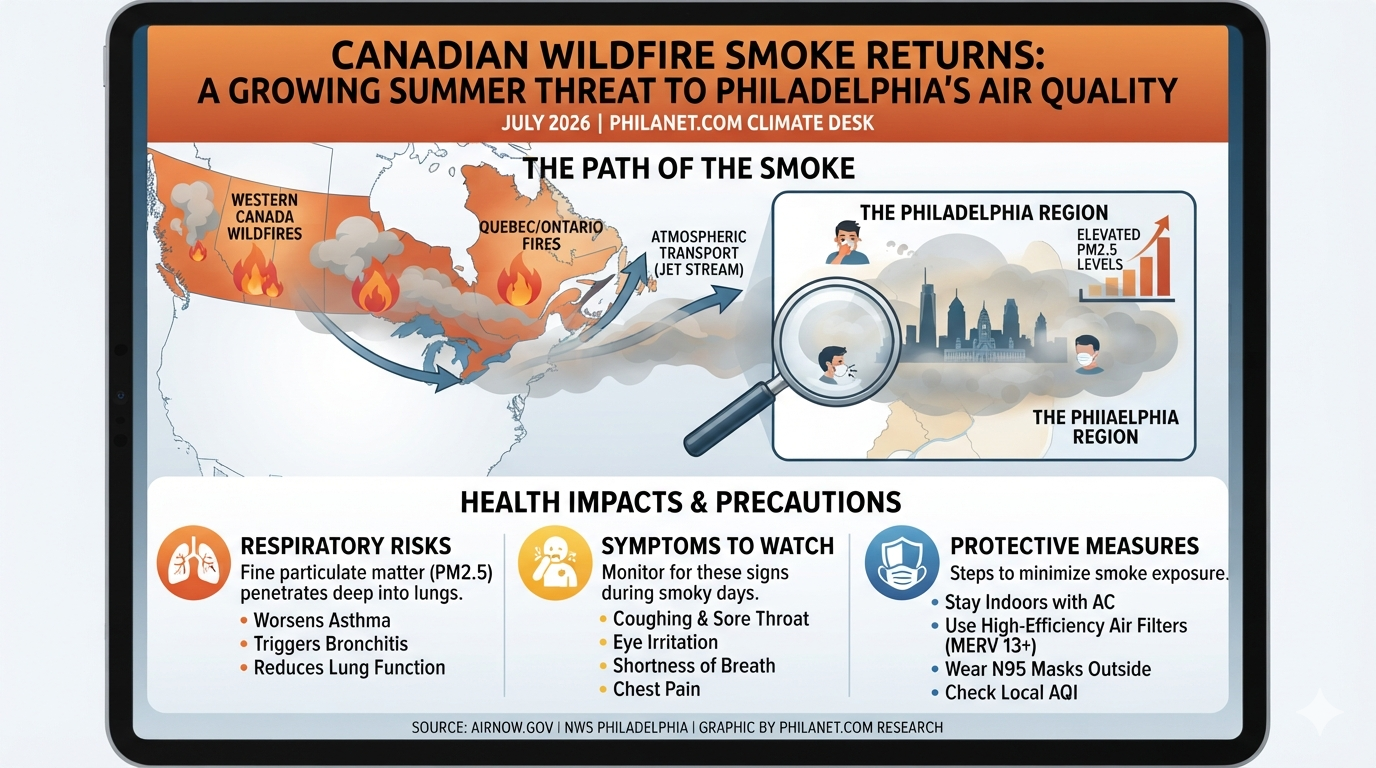
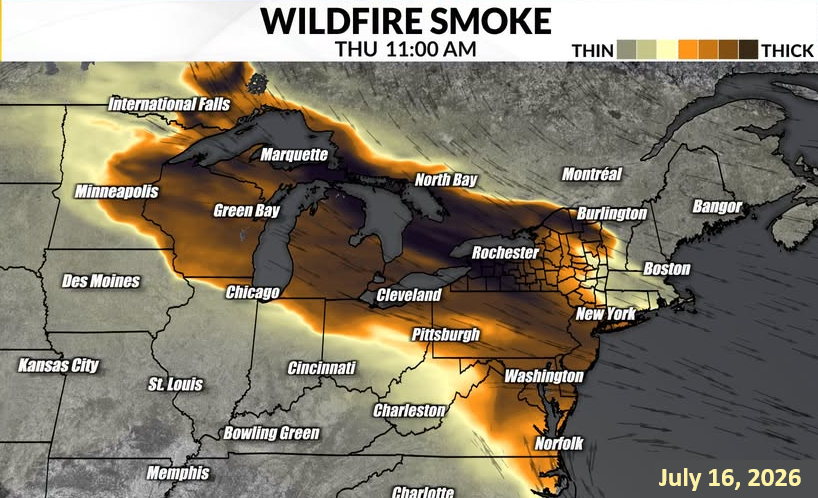
Canadian wildfire smoke is once again drifting into the Philadelphia region, bringing hazy skies, reduced visibility, and deteriorating air quality. Over the next 24 to 48 hours, meteorologists expect a thick plume of smoke to spread across the Delaware Valley as winds transport emissions from large wildfires burning across Canada.
The smoke arrives at the same time an intense near-record heat dome is pushing local temperatures toward 101°F, creating a dangerous combination of extreme heat and air pollution.
A Double Environmental Threat
According to the U.S. National Weather Service in Philadelphia/Mount Holly, smoke from Canadian wildfires is being carried across the Great Lakes and into the northeastern United States. While the smoke may remain high in the atmosphere at times, periods of surface-level smoke can significantly reduce air quality.
The simultaneous occurrence of extreme heat and wildfire smoke amplifies health risks, particularly for vulnerable populations including:
- Children
- Older adults
- Pregnant women
- People with asthma or COPD
- Individuals with heart disease
- Outdoor workers
- Athletes exercising outdoors
Heat stresses the cardiovascular system, while fine smoke particles place additional strain on the lungs and heart.
Current Conditions and Forecast
Residents across southeastern Pennsylvania, New Jersey, and Delaware should expect:
- Smoky, hazy skies with noticeably reduced visibility.
- Dimmed sunlight, giving the sky a milky or orange appearance.
- Extreme Heat Warnings, with heat indices between 100°F and 109°F.
- Worsening air quality, as concentrations of fine particulate matter (PM2.5) increase.
Even when the sky does not appear especially smoky, microscopic particles can remain suspended in the air and pose health risks.
Why Wildfire Smoke Matters
Wildfire smoke contains a complex mixture of gases and microscopic particles. The greatest concern is PM2.5—particles smaller than 2.5 micrometers in diameter. These particles are small enough to bypass the body’s natural defenses and penetrate deep into the lungs, where they may enter the bloodstream.
Exposure to elevated PM2.5 has been linked to:
- Asthma attacks
- Reduced lung function
- Eye, nose, and throat irritation
- Heart attacks and strokes in susceptible individuals
- Increased emergency room visits
- Premature mortality during severe pollution episodes
Even healthy adults may experience coughing, sore throat, headaches, fatigue, or shortness of breath during periods of elevated smoke.
How to Protect Yourself
Because extreme heat and wildfire smoke are occurring simultaneously, taking precautions is especially important.
Stay indoors whenever possible. Keep windows and doors closed, particularly during the afternoon and evening when pollution levels often peak.
Use air conditioning. Operate your HVAC system on the recirculate setting to reduce the amount of outdoor air entering your home. A MERV 13 or higher filter can significantly improve indoor air quality.
Limit strenuous outdoor activity. Running, cycling, heavy yard work, and other vigorous exercise increase breathing rates, causing more smoke particles to be inhaled.
Monitor the Air Quality Index (AQI). Air quality conditions can change rapidly depending on wind direction and the movement of smoke plumes.
Consider wearing a properly fitted N95 respirator if you must spend extended periods outdoors during heavy smoke conditions. Cloth masks and surgical masks do not effectively filter PM2.5 particles.
A New Summer Reality
Canadian wildfire smoke has affected the eastern United States every summer since 2023, highlighting a growing environmental challenge. Warmer temperatures, prolonged droughts, and longer fire seasons have contributed to increasingly large and persistent wildfires across Canada.
As these fires become more frequent and more intense, smoke transport over thousands of miles is becoming an increasingly common feature of summers across the Northeast.
For residents of Philadelphia and much of the East Coast, hazy skies that were once considered unusual are now becoming part of the seasonal weather pattern.
Looking Ahead
While individual smoke events may last only a day or two, they illustrate a broader trend toward more frequent climate-related air quality disruptions. Preparing homes with effective air filtration, monitoring local air quality forecasts, and adjusting outdoor activities during smoke events are becoming practical components of summer health planning.
For now, Philadelphia residents should prepare for hot temperatures, smoky skies, and reduced air quality over the next several days and take appropriate precautions until the smoke plume moves out of the region.
bookmark_borderWhen Celebration Becomes a Mass Casualty Event: Extreme Heat, Public Gatherings, and the New Reality of Climate Risk
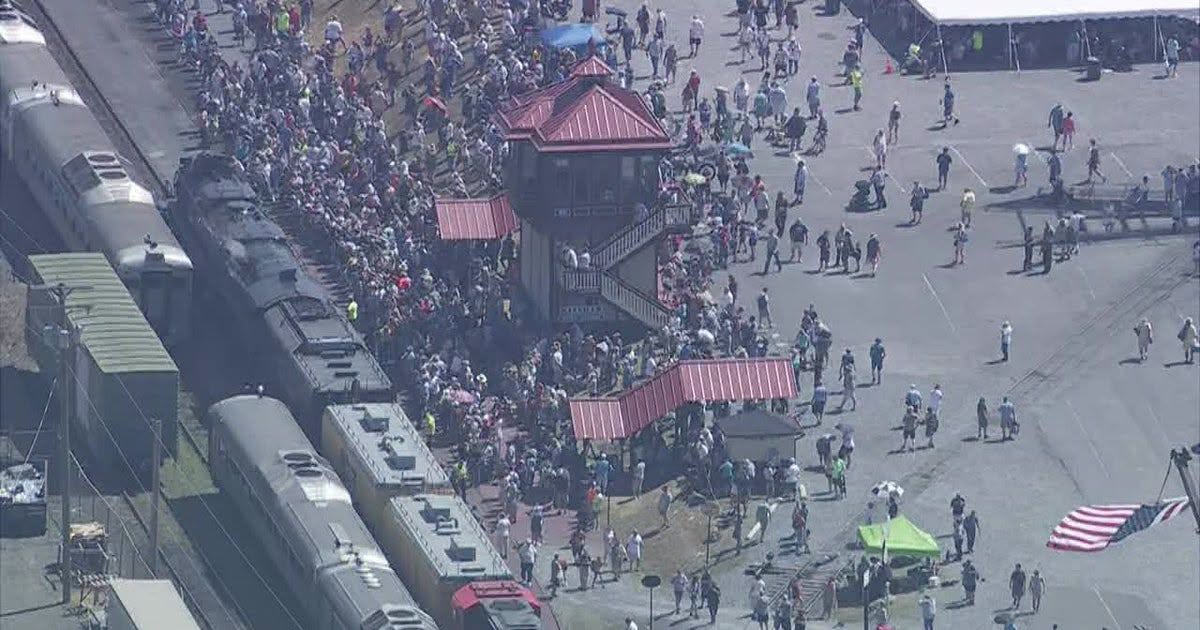
On July 2, 2026, first responders declared a Mass Casualty Incident (MCI) at the Reading Railroad Outer Station in Muhlenberg Township, Pennsylvania, after more than 100 people required medical evaluation for severe heat-related illnesses. The emergency unfolded as thousands of spectators gathered to watch the arrival of the historic Union Pacific “Big Boy” No. 4014 steam locomotive during its nationwide tour commemorating America’s 250th anniversary.
While the event itself drew enormous public interest, the extreme weather ultimately became the dominant story. What was intended as a celebration of engineering history instead became a stark illustration of how climate change is reshaping public safety and challenging emergency preparedness.
Incident Dynamics
Extreme Heat
Air temperatures reached approximately 100°F (38°C), while the heat index exceeded 110°F (43°C) due to elevated humidity. Under these conditions, the human body’s ability to cool itself through sweating becomes increasingly compromised, dramatically increasing the risk of heat exhaustion, heat stroke, cardiovascular strain, and other life-threatening medical emergencies.
Prolonged Exposure
Many spectators arrived around 9:00 AM to secure viewing locations for the train’s scheduled 1:05 PM arrival. When the locomotive was delayed by more than an hour, thousands of people remained outdoors for nearly six hours with limited access to shade or cooling. The prolonged exposure significantly increased cumulative heat stress, particularly among vulnerable individuals.
Medical Emergency
As temperatures climbed through the afternoon, medical crews were quickly overwhelmed.
Infants, young children, older adults, and individuals with underlying medical conditions were among the first to require treatment. Many attendees developed heat exhaustion, while others progressed to heat stroke—a medical emergency that can rapidly lead to organ failure, permanent neurological damage, or death if not treated immediately.
One individual suffered cardiac arrest and was successfully resuscitated at the scene. By the end of the incident, approximately 35 people had been transported to area hospitals, while more than 100 individuals required medical evaluation or treatment.
Emergency Response
The declaration of a Mass Casualty Incident (MCI) allowed emergency agencies to rapidly coordinate resources across southeastern Pennsylvania.
Fire departments, EMS agencies, and support personnel from Berks, Lancaster, Chester, and Schuylkill counties responded under a unified command structure.
Nearby Muhlenberg Park was converted into an emergency treatment area, where responders established:
- Medical triage tents
- Cooling buses
- Misting and water stations
- Patient stabilization areas
- Ambulance staging zones
The coordinated response almost certainly prevented additional fatalities.
Climate Change and Escalating Heat Risk
Although extreme heat has always occurred, climate change is making these events significantly more frequent, more intense, and more persistent.
Average temperatures have increased substantially over the past century, but one of the most important changes is the rise in extreme heat events. Heat waves are occurring more often, lasting longer, and increasingly producing dangerous nighttime temperatures that prevent the human body from recovering between periods of daytime heat exposure.
Higher atmospheric temperatures also allow the air to hold more moisture, increasing humidity in many regions. Elevated humidity reduces the effectiveness of sweating—the body’s primary cooling mechanism—causing the heat index to climb well above the measured air temperature. As a result, conditions that were once merely uncomfortable can quickly become life-threatening.
Scientists have also documented that nighttime minimum temperatures are increasing faster than daytime maximum temperatures in many locations. This loss of overnight cooling compounds physiological stress and contributes to higher rates of illness and mortality during prolonged heat waves.
A New Challenge for Public Events
Traditionally, emergency planners focused primarily on crowd control, traffic management, severe storms, or security concerns. Increasingly, however, extreme heat itself is becoming one of the greatest operational risks.
Large outdoor gatherings—including concerts, sporting events, festivals, parades, fairs, and public celebrations—must now incorporate heat risk into every stage of planning. Organizers should consider:
- Canceling the event
- Extensive shaded areas
- Readily available drinking water
- Cooling and misting stations
- Medical screening and rapid-response teams
- Flexible scheduling to avoid peak afternoon heat
- Clear public messaging about heat illness symptoms
- Emergency contingency plans for extreme heat events
As climate change continues to intensify, these measures will become essential components of public safety rather than optional amenities.
Beyond Immediate Heat Illness
The impacts of extreme heat extend well beyond heat exhaustion and heat stroke.
Exposure to high temperatures has been associated with increased risks of cardiovascular disease, kidney injury, respiratory illness, sleep disruption, cognitive impairment, pregnancy complications, and worsening mental health. Emerging research also suggests that chronic heat exposure may accelerate biological aging, alter immune function, and contribute to cellular stress through epigenetic mechanisms.
When extreme heat coincides with elevated ozone levels or wildfire smoke, the combined physiological burden becomes even greater, particularly for children, older adults, outdoor workers, and individuals with chronic medical conditions.
Conclusion
The Muhlenberg Township Mass Casualty Incident demonstrates how climate change is transforming extreme heat from an occasional weather hazard into a recurring public safety challenge.
What began as a community celebration quickly evolved into a large-scale medical emergency because thousands of people were exposed to prolonged, dangerous heat under conditions that exceeded the body’s ability to dissipate excess thermal energy.
As the climate continues to warm, emergency planners, public officials, and event organizers will increasingly need to treat extreme heat with the same seriousness traditionally reserved for hurricanes, floods, tornadoes, and severe thunderstorms. The events in Berks County serve as a reminder that in a warming world, heat itself is becoming one of the deadliest hazards—and one of the most predictable.
Future public gatherings will require adaptation not only to protect comfort, but to protect lives.