**AIR QUALITY ALERT — PHILADELPHIA & THE NORTHEASTERN U.S.**
**Code Red Air Quality Alert** issued today for much of the Philadelphia region and large portions of the Northeastern United States.
Today’s unhealthy air is being driven by a dangerous combination of **ground-level ozone (smog)** and **fine particulate pollution (PM₂.₅)**. Everyone is at risk. Particularly vulnerable are children, older adults, pregnant women, people with asthma or heart disease, and anyone who spends extended time outdoors, all of whom face an elevated risk of adverse health effects.
But this isn’t just another bad air day.
It’s a preview of the future.
Climate change is creating the perfect conditions for worsening air quality:
More extreme heat creates more ozone.
More drought fuels larger wildfires.
Wildfire smoke releases massive amounts of PM₂.₅.
Those pollutants also contribute to additional warming through powerful climate feedback loops.
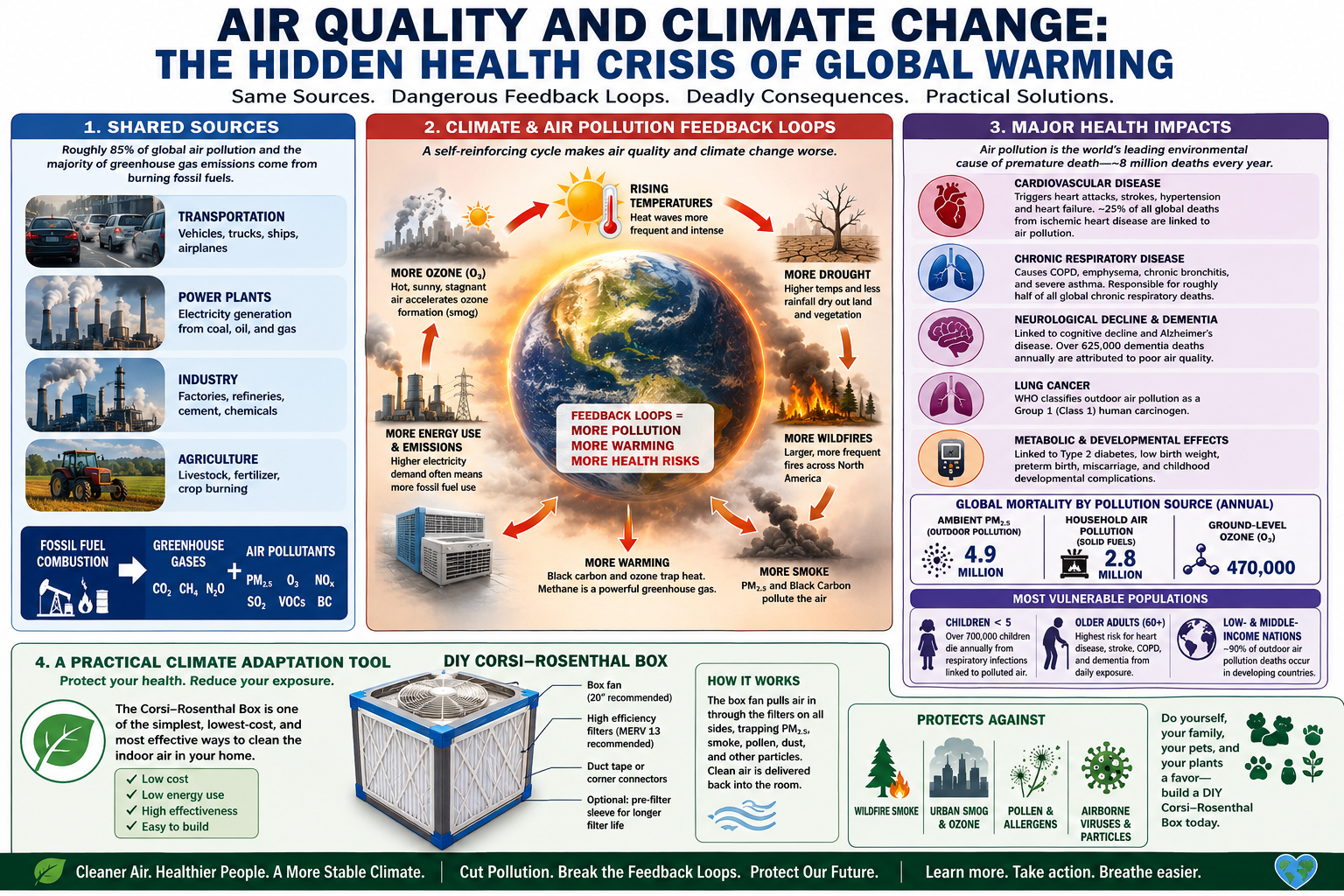
Air pollution is now the world’s leading environmental cause of premature death, contributing to **nearly 8 million deaths every year**.
I’ve just published a new article:
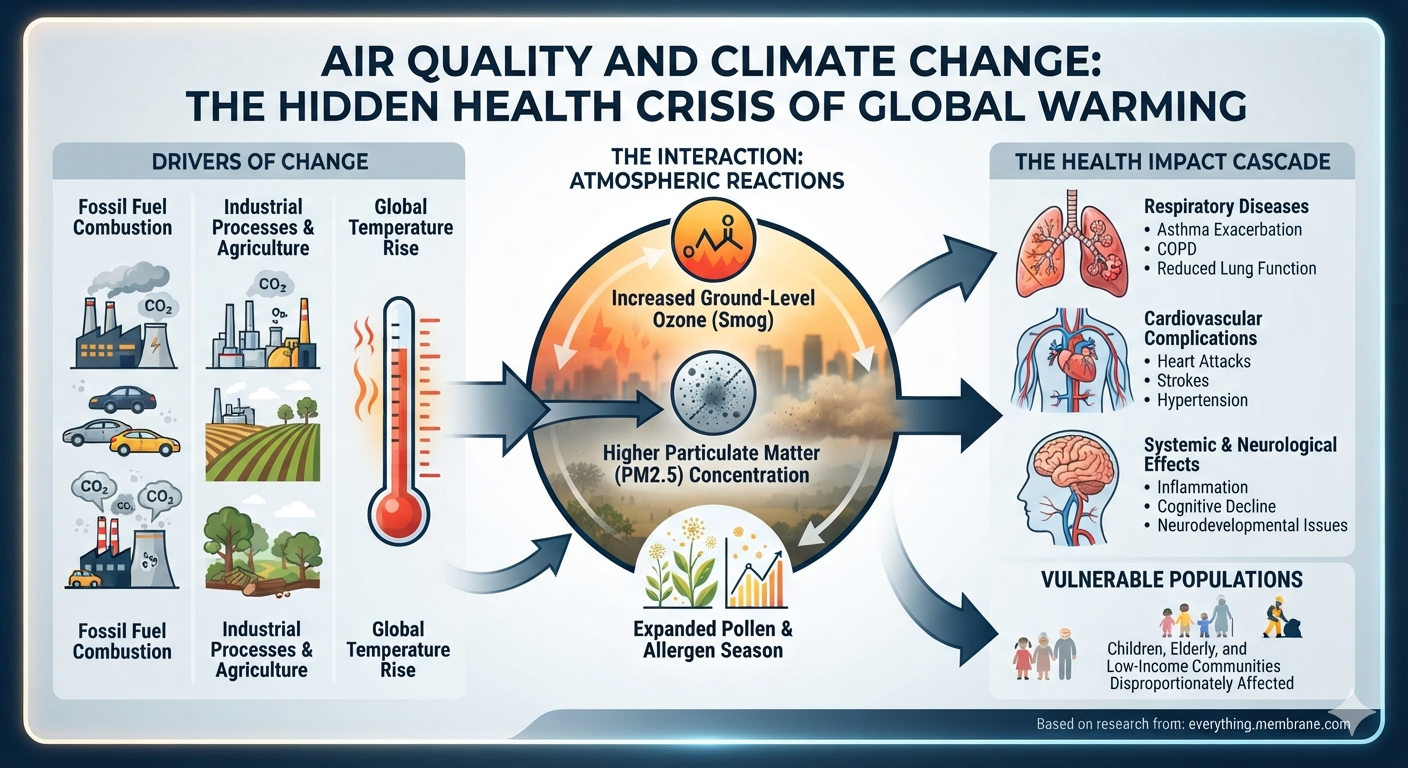
**”Air Quality and Climate Change: The Hidden Health Crisis of Global Warming”**
The paper explains:
• Why climate change and air pollution are inseparable
• How ozone and wildfire smoke are increasing across North America
• The major health risks—from asthma and heart disease to dementia and lung cancer
• The climate feedback loops making pollution worse
• One inexpensive solution that can dramatically improve indoor air quality: the DIY **Corsi–Rosenthal Box**
As our climate changes, clean indoor air is becoming just as important as clean drinking water.
Please stay informed, limit outdoor activity during Code Red conditions, check on vulnerable family members and neighbors, and consider building a Corsi–Rosenthal Box before the next smoke or ozone event.
Do yourself, your family, your pets, and even your houseplants a favor—build a DIY Corsi–Rosenthal Box.
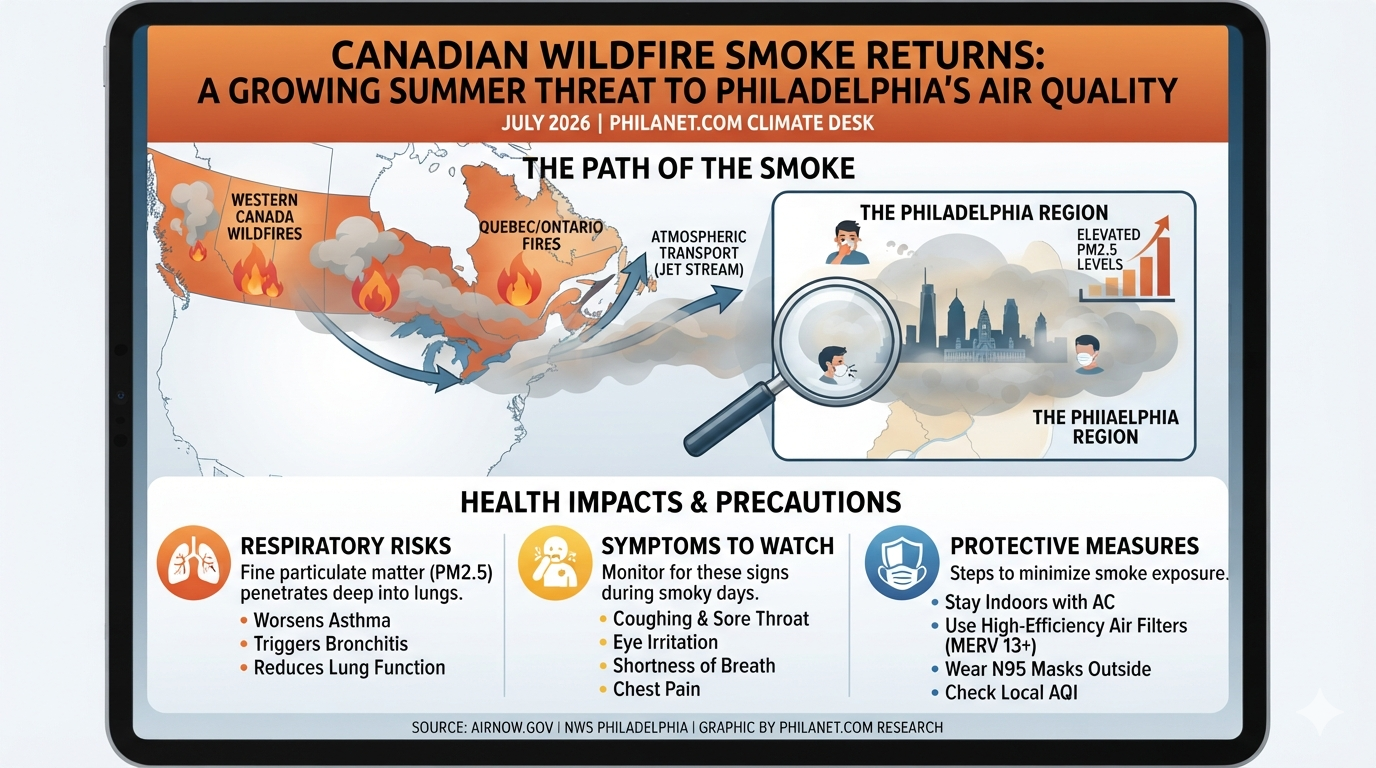
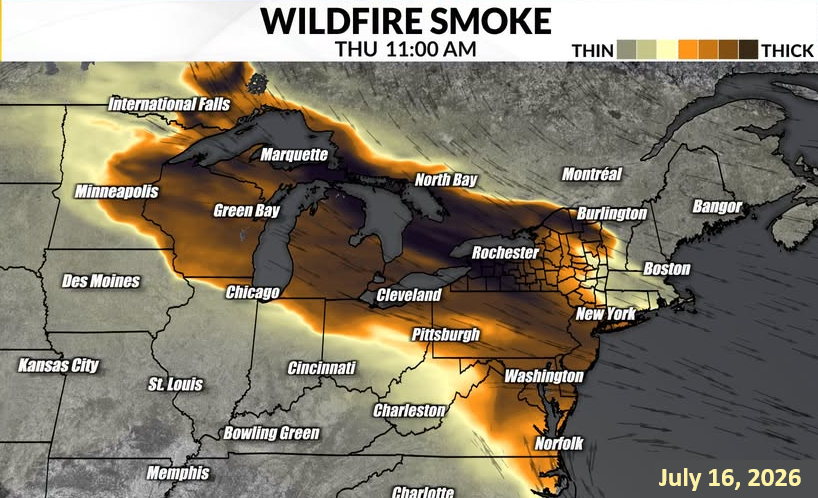
Canadian wildfire smoke is once again drifting into the Philadelphia region, bringing hazy skies, reduced visibility, and deteriorating air quality. Over the next 24 to 48 hours, meteorologists expect a thick plume of smoke to spread across the Delaware Valley as winds transport emissions from large wildfires burning across Canada.
The smoke arrives at the same time an intense near-record heat dome is pushing local temperatures toward 101°F, creating a dangerous combination of extreme heat and air pollution.
A Double Environmental Threat
According to the U.S. National Weather Service in Philadelphia/Mount Holly, smoke from Canadian wildfires is being carried across the Great Lakes and into the northeastern United States. While the smoke may remain high in the atmosphere at times, periods of surface-level smoke can significantly reduce air quality.
The simultaneous occurrence of extreme heat and wildfire smoke amplifies health risks, particularly for vulnerable populations including:
Children
Older adults
Pregnant women
People with asthma or COPD
Individuals with heart disease
Outdoor workers
Athletes exercising outdoors
Heat stresses the cardiovascular system, while fine smoke particles place additional strain on the lungs and heart.
Current Conditions and Forecast
Residents across southeastern Pennsylvania, New Jersey, and Delaware should expect:
Smoky, hazy skies with noticeably reduced visibility.
Dimmed sunlight, giving the sky a milky or orange appearance.
Extreme Heat Warnings, with heat indices between 100°F and 109°F.
Worsening air quality, as concentrations of fine particulate matter (PM2.5) increase.
Even when the sky does not appear especially smoky, microscopic particles can remain suspended in the air and pose health risks.
Why Wildfire Smoke Matters
Wildfire smoke contains a complex mixture of gases and microscopic particles. The greatest concern is PM2.5—particles smaller than 2.5 micrometers in diameter. These particles are small enough to bypass the body’s natural defenses and penetrate deep into the lungs, where they may enter the bloodstream.
Exposure to elevated PM2.5 has been linked to:
Asthma attacks
Reduced lung function
Eye, nose, and throat irritation
Heart attacks and strokes in susceptible individuals
Increased emergency room visits
Premature mortality during severe pollution episodes
Even healthy adults may experience coughing, sore throat, headaches, fatigue, or shortness of breath during periods of elevated smoke.
How to Protect Yourself
Because extreme heat and wildfire smoke are occurring simultaneously, taking precautions is especially important.
Stay indoors whenever possible. Keep windows and doors closed, particularly during the afternoon and evening when pollution levels often peak.
Use air conditioning. Operate your HVAC system on the recirculate setting to reduce the amount of outdoor air entering your home. A MERV 13 or higher filter can significantly improve indoor air quality.
Limit strenuous outdoor activity. Running, cycling, heavy yard work, and other vigorous exercise increase breathing rates, causing more smoke particles to be inhaled.
Monitor the Air Quality Index (AQI). Air quality conditions can change rapidly depending on wind direction and the movement of smoke plumes.
Consider wearing a properly fitted N95 respirator if you must spend extended periods outdoors during heavy smoke conditions. Cloth masks and surgical masks do not effectively filter PM2.5 particles.
A New Summer Reality
Canadian wildfire smoke has affected the eastern United States every summer since 2023, highlighting a growing environmental challenge. Warmer temperatures, prolonged droughts, and longer fire seasons have contributed to increasingly large and persistent wildfires across Canada.
As these fires become more frequent and more intense, smoke transport over thousands of miles is becoming an increasingly common feature of summers across the Northeast.
For residents of Philadelphia and much of the East Coast, hazy skies that were once considered unusual are now becoming part of the seasonal weather pattern.
Looking Ahead
While individual smoke events may last only a day or two, they illustrate a broader trend toward more frequent climate-related air quality disruptions. Preparing homes with effective air filtration, monitoring local air quality forecasts, and adjusting outdoor activities during smoke events are becoming practical components of summer health planning.
For now, Philadelphia residents should prepare for hot temperatures, smoky skies, and reduced air quality over the next several days and take appropriate precautions until the smoke plume moves out of the region.
The greatest systemic and exponential risk to the Philadelphia area and its real estate market is climate change. This is already evident in the insurance market. As climate-related damage accelerates, homeowners insurance will become increasingly difficult to afford or obtain. Florida offers a glimpse of the future, having effectively moved toward government-subsidized insurance as private coverage retreats. For in-depth information, along with additional links and resources, see: Climate Change and Insurance: Costs, Availability, and Sustainability.
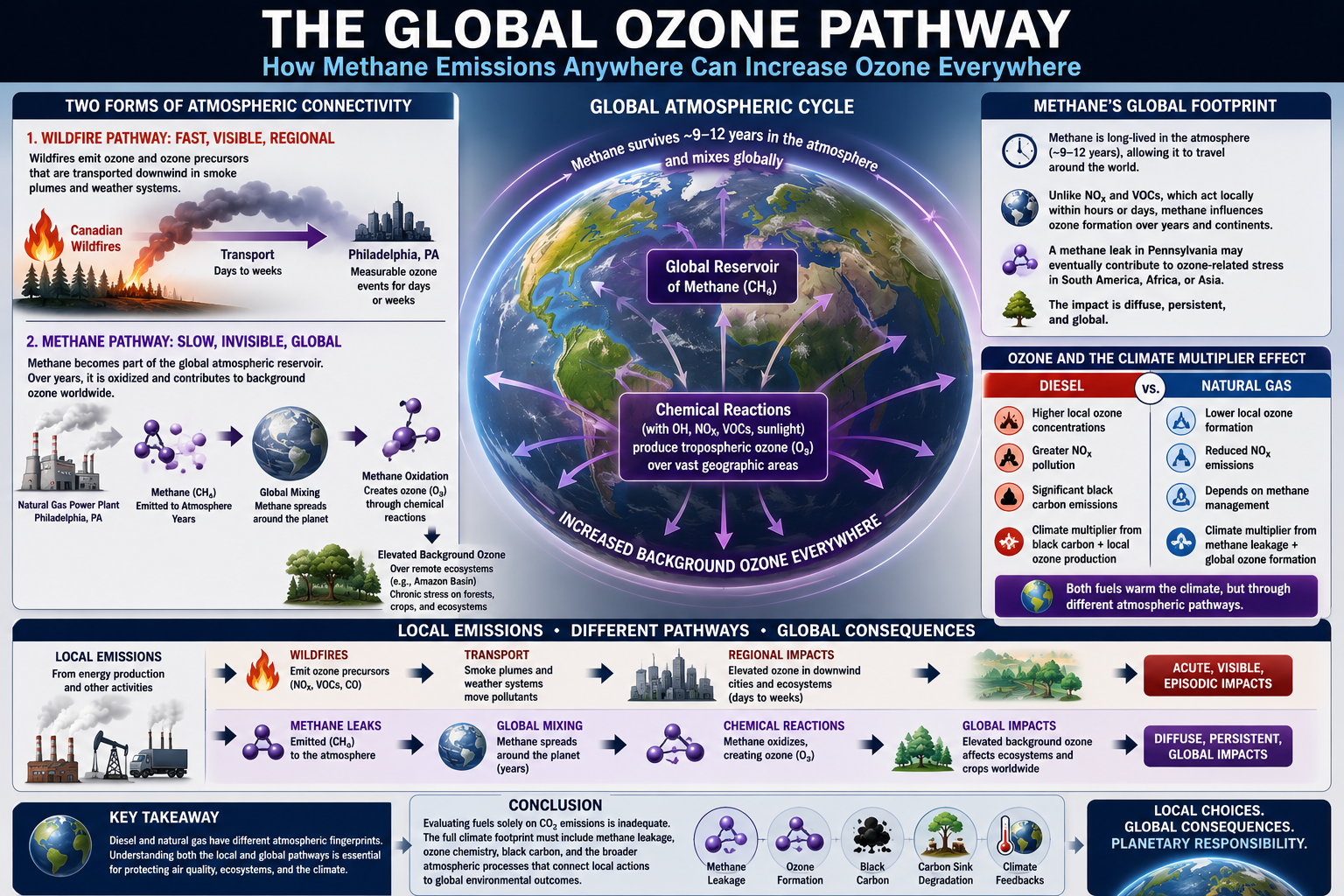
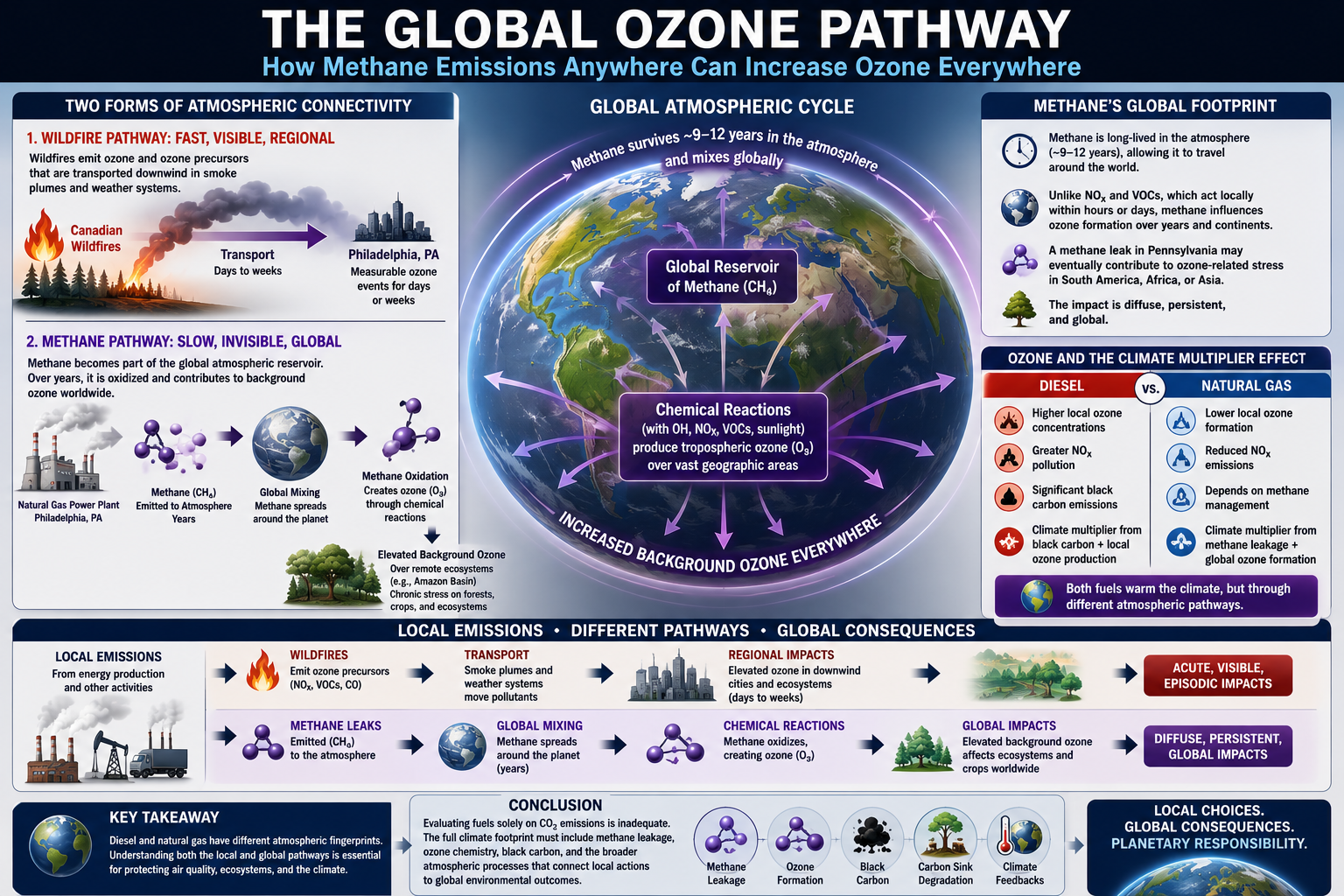
Philadelphia and the Ozone Feedback This paper examines how wildfires in Canada create dangerous ozone in Philadelphia and how emissions from Philadelphia power generation contribute to ozone formation affecting ecosystems in the Amazon.
Global warming has inflicted irreversible damage on our environment, a consensus echoed by nearly all scientists. Indeed, climate change poses a profound challenge. Our planet is witnessing conditions that increasingly jeopardize human habitation. The critical question now is whether we can adapt swiftly enough.
Human-induced climate change is a dynamic component of an intricate and unordered system, as per chaos theory. This implies that global warming is accelerating exponentially in a complex manner. Over the period from 1992 to the present, we have presented compelling evidence, proposed remedies to mitigate climate change, and amassed valuable information through the engagement of millions with this climate model. Your participation has been invaluable. The incontrovertible data underscores that human-induced climate change is rapidly deteriorating our habitat.
 **AIR QUALITY ALERT — PHILADELPHIA & THE NORTHEASTERN U.S.**
  More extreme heat creates more ozone.
 More drought fuels larger wildfires.
 Wildfire smoke releases massive amounts of PM₂.₅.
 Those pollutants also contribute to additional warming through powerful climate feedback loops.