Extreme humid heat is one of the deadliest weather hazards. It can cause heat exhaustion, heat stroke, permanent organ damage, and death. Beyond its immediate dangers, growing scientific evidence suggests that repeated exposure to extreme heat accelerates biological aging, impairs immune function, increases cellular stress, and contributes to long-term health risks. An Air Quality Alert is also in effect today, compounding the danger as elevated levels of ozone and fine particulate pollution increase respiratory and cardiovascular stress, particularly for sensitive individuals. Together, extreme heat and poor air quality create a significantly greater public health risk than either hazard alone.
Today’s Heat Risk
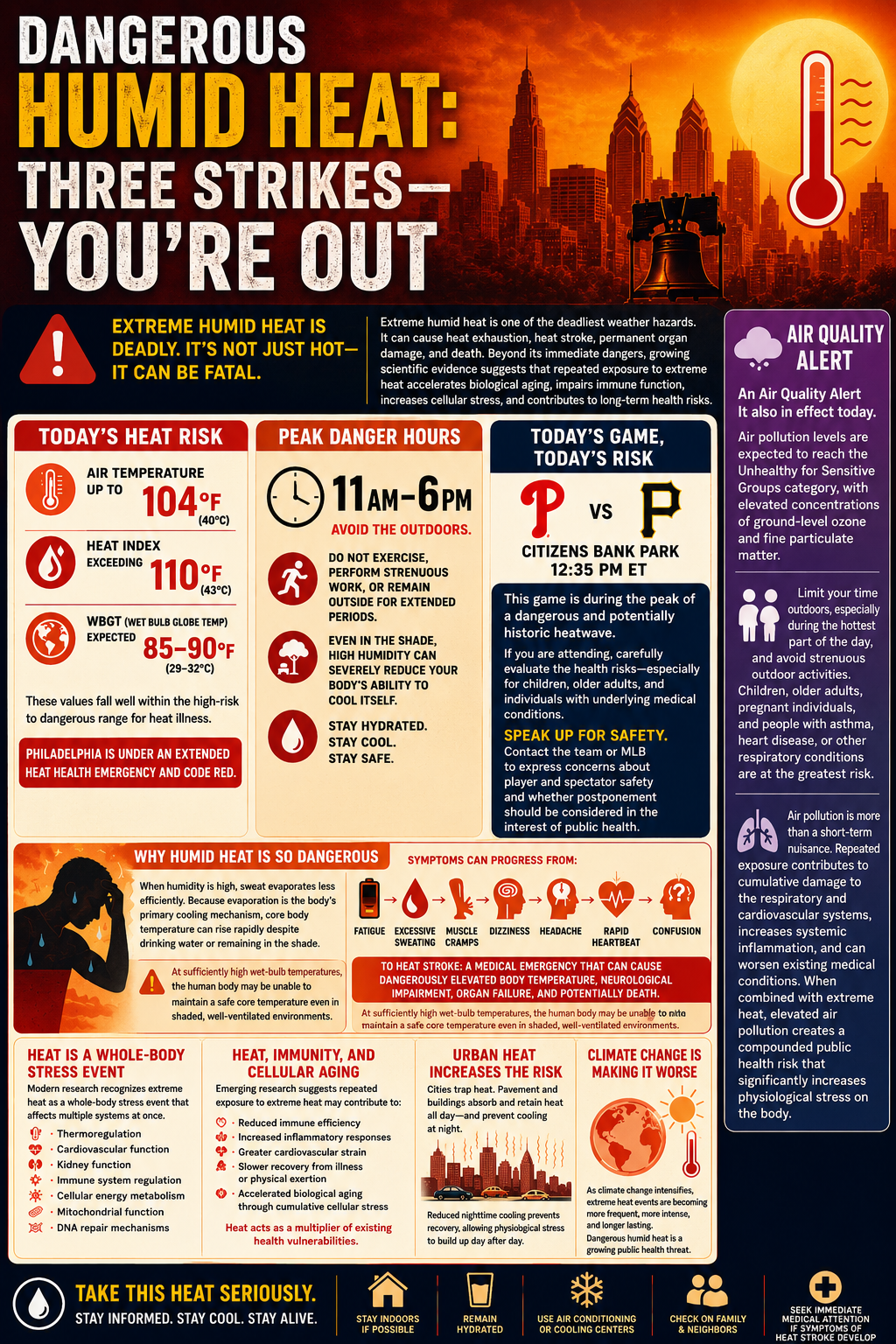
Today’s forecast for the Philadelphia region calls for air temperatures approaching 104°F (40°C) with heat index values exceeding 110°F (43°C). During the hottest part of the day, the Wet Bulb Globe Temperature (WBGT)—which accounts for air temperature, humidity, solar radiation, and wind—is expected to reach approximately 85°F to 90°F (29°C to 32°C).
These values fall well within the high-risk to dangerous range for heat illness. Philadelphia is under an extended Heat Health Emergency and Code Red.
Avoid spending time outdoors between 11:00 a.m. and 6:00 p.m. Do not exercise, perform strenuous work, or remain outside for extended periods. Even in the shade, high humidity can severely reduce your body’s ability to cool itself through sweating.
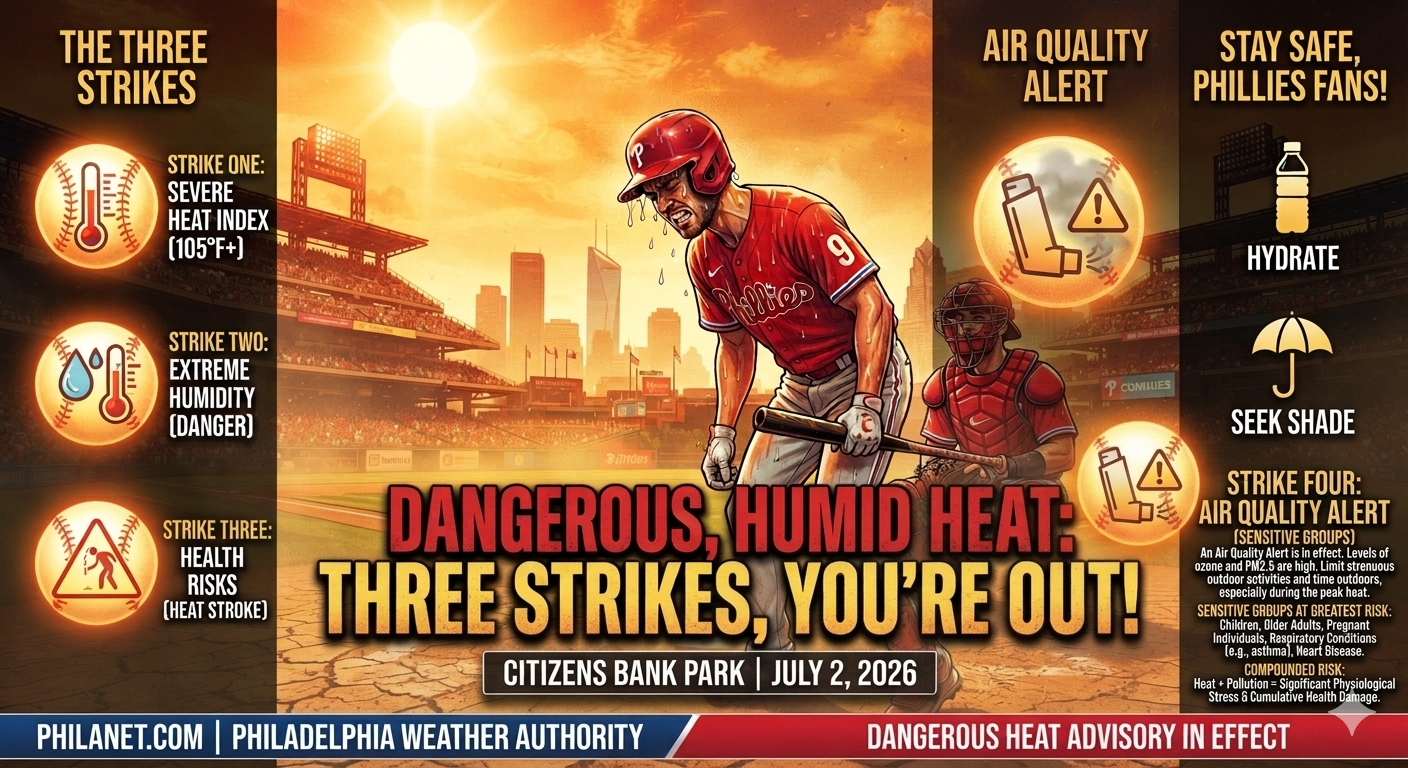
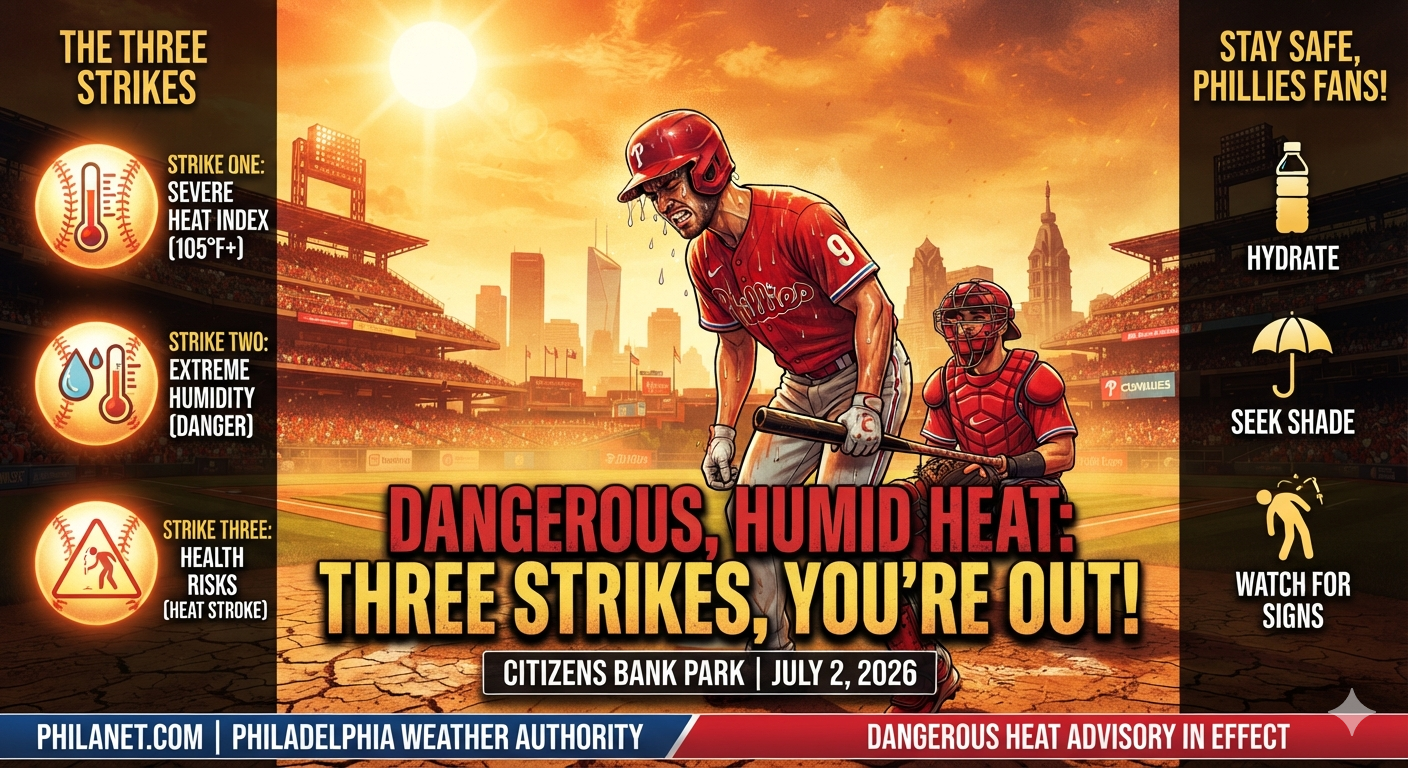
Today’s game against the Pittsburgh Pirates at Citizens Bank Park is scheduled to begin at 12:35 PM ET, during the peak of a dangerous and potentially historic heatwave. With extreme temperatures and hazardous humid heat expected throughout the afternoon, the game will be played under challenging conditions despite enhanced safety measures implemented by local officials and the team.
If you are considering attending, carefully evaluate the health risks associated with exposure to extreme heat, particularly for children, older adults, and individuals with underlying medical conditions. If you believe conditions pose an unacceptable risk to players, staff, and fans, consider contacting the team or Major League Baseball to express your concerns about player and spectator safety and whether postponement should be considered in the interest of public health.
Why Humid Heat Is So Dangerous
When humidity is high, sweat evaporates less efficiently. Because evaporation is the body’s primary cooling mechanism, core body temperature can rise rapidly despite drinking water or remaining in the shade.
As heat stress increases, symptoms may progress from:
- Fatigue
- Excessive sweating
- Muscle cramps
- Dizziness
- Headache
- Rapid heartbeat
- Confusion
to heat stroke, a medical emergency characterized by dangerously elevated body temperature, neurological impairment, organ failure, and potentially death.
At sufficiently high wet-bulb temperatures, the human body may be unable to maintain a safe core temperature even in shaded, well-ventilated environments.
Heat Is a Whole-Body Stress Event
Modern biomedical research increasingly recognizes extreme heat as more than dehydration or discomfort. Heat places simultaneous stress on multiple physiological systems, including:
- Thermoregulation
- Cardiovascular function
- Kidney function
- Immune system regulation
- Cellular energy metabolism
- Mitochondrial function
- DNA repair mechanisms
Rather than affecting only one organ system, extreme heat produces a whole-body physiological stress response that can significantly increase the risk of illness and mortality.
Heat, Immunity, and Cellular Aging
Emerging research indicates that exposure to extreme heat increases oxidative stress and systemic inflammation while placing additional demands on the body’s cellular repair systems.
Studies suggest heat exposure may contribute to:
- Reduced immune efficiency
- Increased inflammatory responses
- Greater cardiovascular strain
- Slower recovery from illness or physical exertion
- Accelerated biological aging through cumulative cellular stress
Research is also investigating how prolonged heat stress may influence epigenetic regulation and other biological pathways that affect long-term health. Although this field continues to develop, there is growing evidence that extreme heat acts as a multiplier of existing health vulnerabilities, particularly among older adults, children, outdoor workers, and individuals with chronic medical conditions.
Urban Heat Increases the Risk
Cities are especially vulnerable because pavement, buildings, and other infrastructure absorb and retain heat throughout the day. Reduced nighttime cooling prevents the body from fully recovering, allowing physiological stress to accumulate over consecutive days.
As climate change increases the frequency, intensity, and duration of extreme heat events, dangerous humid heat is becoming an increasingly significant public health threat.
Take this heat seriously. Stay indoors if possible, remain hydrated, use air conditioning or cooling centers, check on family members and neighbors, and seek immediate medical attention if symptoms of heat stroke develop.
Air Quality Alert
An Air Quality Alert is also in effect today. Air pollution levels are expected to reach the Unhealthy for Sensitive Groups category, with elevated concentrations of ground-level ozone and fine particulate matter.
Limit your time outdoors, especially during the hottest part of the day, and avoid strenuous outdoor activities. Children, older adults, pregnant individuals, and people with asthma, heart disease, or other respiratory conditions are at the greatest risk.
Air pollution is more than a short-term nuisance. Repeated exposure contributes to cumulative damage to the respiratory and cardiovascular systems, increases systemic inflammation, and can worsen existing medical conditions. When combined with extreme heat, elevated air pollution creates a compounded public health risk that significantly increases physiological stress on the body.